Engineered for Load. Built for Endurance. Designed for Precision.
About Compression Springs
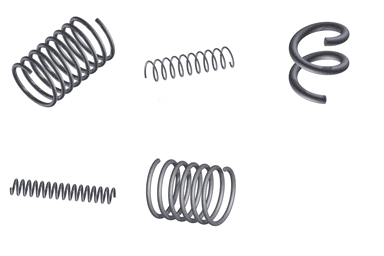
Compression springs are designed to resist compressive forces and return to their original length when the load is removed. They are among the most widely used spring types, serving critical roles in assemblies that require controlled force, shock absorption, vibration dampening, or stored mechanical energy.
Performance depends on precise coil geometry, spring rate, material selection, and operating environment. In demanding applications, compression springs must maintain consistent load characteristics across millions of cycles without fatigue or permanent set. When properly engineered, they deliver predictable force and long-term reliability.
Engineered for Functional Performance
Compression spring design begins with understanding load requirements, deflection limits, available space, and cycle life expectations. Every variable impacts performance.
Engineering support includes:
Spring rate calculation and validation
Solid height and deflection analysis
Material selection based on fatigue and environmental demands
Tolerance refinement for consistent fit and function
Manufacturability review to reduce variation at scale
Whether refining an existing print or developing a new design from first principles, the objective is to ensure the compression spring performs reliably in its intended application.
Applications Across Industries
Compression springs are used wherever controlled resistance and reliable return force are required
Automotive suspension and valve systems
Industrial machinery and automation
Agricultural equipment
Medical devices and instruments
Energy and heavy-duty applications
Consumer and appliance assemblies
Built for Engineers
Compression springs are not commodity parts, they are engineered components designed to meet specific load and cycle requirements. By combining design collaboration, metallurgical expertise, and scalable manufacturing capability, we help ensure your compression spring performs consistently over the life of the product.